
On Stage
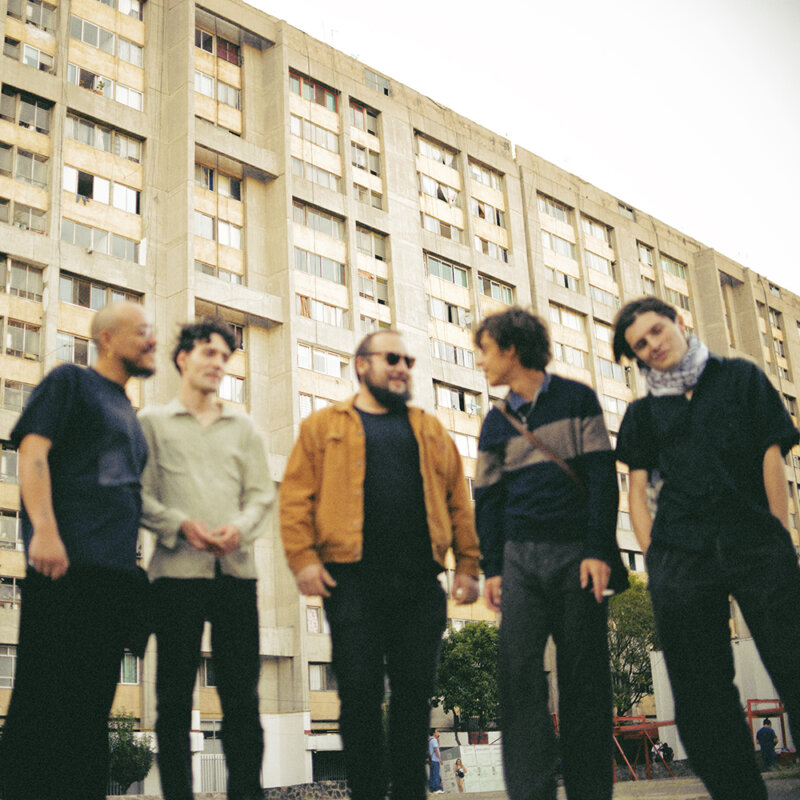
Founded in 2017 by brothers Raúl (drums) and Gerardo (guitar) Ponce, the Mexico City-based band Diles Que No Me Maten have come a long way since their self-released 2020 debut LP, Edificio. Now a five-piece juggernaut that’s well established as a beloved institution in the city’s flourishing arts scene, the forthcoming reissue of their second and third albums–La vida de alguien más and Obrigaggi via new imprint Moonlight Activities–reflects their journey from local favourites to international band to watch.
Like any band worth listening to, Diles started small, cutting their teeth together and separately in countless groups across the Mexican capital. In their earliest, metal-leaning iteration, Diles’ first three shows were followed by cumbia afterparties, and, in one odd case, preceded by a magic show. They eventually coalesced into an improvisation-led unit featuring Jerónimo Elizondo-García (guitar, clarinet) and Andrés Lupone (bass), with Jonás Dérbez–a freewheeling poet and saxophonist–taking center stage as the group’s frontman. With a shared language based on a mutual love of krautrock and free jazz, the quintet further developed the dynamic and fiery mix that powered their first tape (Cayó de su Gloria el Diablo) and album (Edificio).
The band is just as explosive on stage, always keeping their fans guessing as to what might happen next. Will Diles turn my favourite song into an extended jam? Will they switch to another song right as my song is hitting its stride? Will they play something I’ve never heard, that I could never have imagined hearing? As it turns out, the band are almost as unsure of how their sets will unfold. During any song or improvisational groove, a member of the band can introduce the idea of changing to another track simply by starting to play it. Most of the time, the others will seamlessly follow suit, but sometimes they’ll simply ignore their bandmate, thus shutting down the suggestion. As the drummer, Raúl is often the deciding vote, but the majority rules. A sometimes-singer, sometimes-saxophonist, mostly-poet frontman, Dérbez is equal parts charismatic and chaotic, tearing at his hair as he fires off bursts of literary brilliance faster than an enraged battle rapper. Gerardo’s subtly intricate guitar playing and Elizondo-García’s sneakily virtuosic multi-instrumentalism comprise the rest of the top line. Lupone provides the germanophilia with krautrock-informed basslines that are equal parts steady and inventive. Raúl, who can play the drums in any style with the confidence and precision of a master, leads from the back.
Diles’ breakout moment came in October 2021 with La vida de alguien más (Someone Else’s Life), an endlessly ambitious sophomore effort. Created during the “neonormality” of a locked-down world, it tells the story of “another person”–or, rather, a person who becomes another person by liberating themself from their former understanding of personhood. The theme is introduced succinctly in the album’s opening lyrics: “Hoy es un día cualquiera pero yo ya no soy yo (“Today is just another day, but I’m not me anymore”),” deadpans Dérbez, his voice doubled and phased in a way that immediately establishes the album’s delirium.
La vida leaps joyfully between discrete “songs” like the relentlessly motorik “Outro” and freeform odysseys like “2021,” in which Dérbez riffs over a barely present synth beat. Most tracks are hybrids of the two styles; take “Vanidad” (“Vanity”) which begins as a sludgy slow roller before descending into madness. And yet the album still coheres: it’s a messy, beautiful behemoth that accomplishes an astonishing amount in just 34 minutes.
Their next album, 2023’s Obrigaggi, is a singular free-flowing entity. Recorded in the span of a week in a house in the jungle by the river in Xalapa, Veracruz, it’s an intimate look into the hearts and souls of its creators. The songs float along like spectral swimmers, buoyed by melodic and harmonic motifs, laments that encapsulate the beauty and suffering of life on Earth. Diles have avoided defining the album’s title–a self-coined term that sounds most similar to the Portuguese word for “thank you”–but, if the music and lyrics are indication, it has to do with the liminality of life and love.
These reissues in no way signal a pause in the band’s creative output. There’s a new album already in the works that features Diles’ most intense and inventive creations to date. While still rooted in an improvisational creative process, the material was painstakingly composed, arranged, and overdubbed–opening new possibilities for their sound.
Taken together with their existing catalogue, Diles’ next chapter proves that they’re just as confounding and unpredictable in the studio as onstage. It’s rare to see a band so early in their career with so much confidence in their process and their sound that they can take both in entirely different directions without losing an ounce of their magic. Their intrigue is growing by the minute, and their global moment is fast approaching.