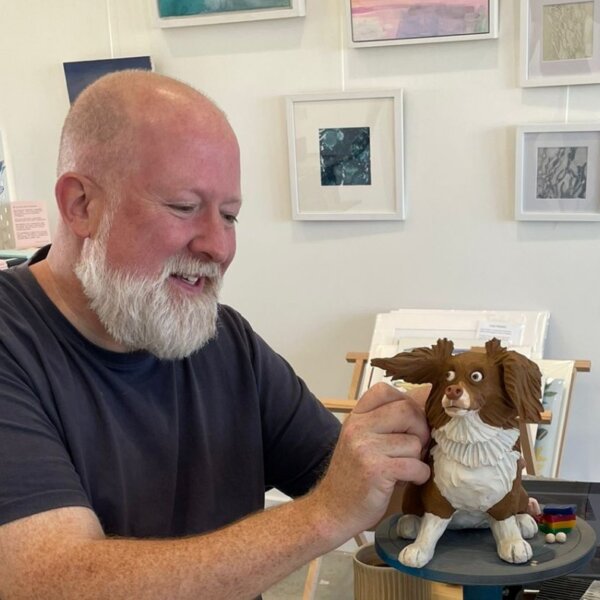
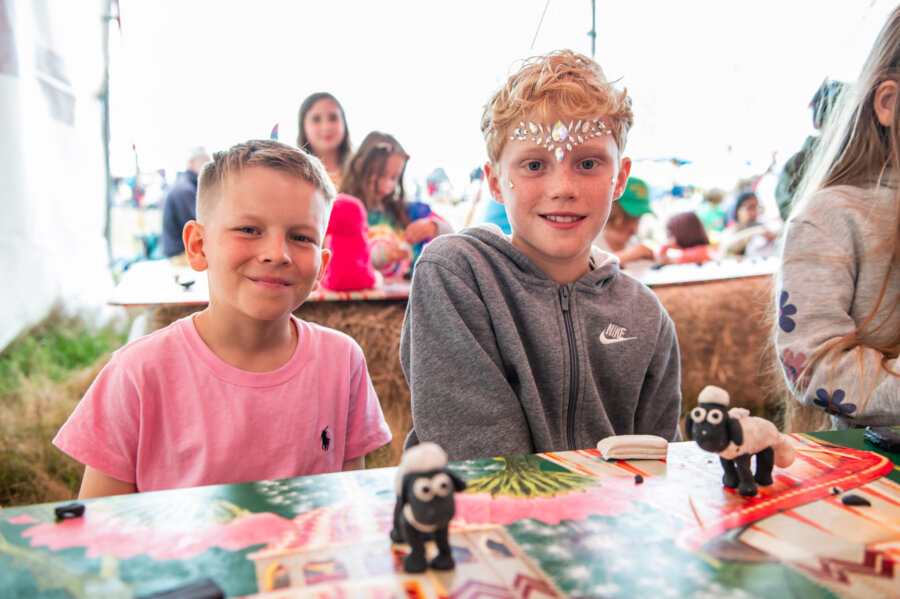
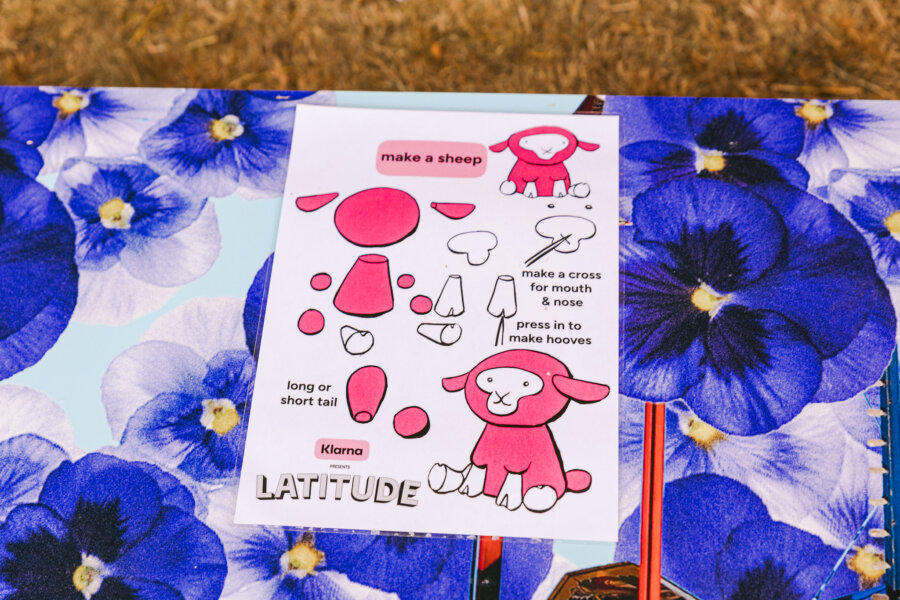
For three decades, Jim Parkyn has quietly been responsible for some of the most beloved characters ever to wobble across British screens. A model maker working in film and animation with Aardman and the BBC since the early nineties, his hands have shaped the likes of Morph, Shaun the Sheep, Wallace and Gromit, and a whole menagerie of Creature Comforts critters. And every summer, he brings that magic to the top of the hill at Latitude, where families queue up for a chance to sit at his table with a lump of clay and make something of their own.
As Latitude celebrates its 20th anniversary at Henham Park this July, we caught up with Jim to talk about the joy of slapstick, the courage it takes for a grown-up to hold clay, and what he’d do if anyone asked him to sculpt this year’s line-up in miniature.
"I'd like to make the whole Latitude line-up in modelling clay. Latitude in miniature, that would be absolutely incredible. If anybody wants to commission me to make the Latitude line-up in clay, I'd be more than happy to do that."
Jim Parkyn
Jim’s love of animation started, as so many great careers do, in front of the telly on a Saturday morning. “I’ve grown up alongside programmes like Morph and Wallace and Gromit,” he says. “I am literally the same age as Morph.” But a tutor called Simon English, teaching a film and television course on a Wednesday afternoon at art college, properly lit the fuse. “He would give us a couple of hours every Wednesday to come and play with cameras. It was the early nineties, so VHS cameras, and we’d go out and do stupid things and silly stunts. But he also taught us about animation, and let me know there was an opportunity to actually study it at degree level.” Jim headed to Pontypridd in South Wales to dedicate himself to cartoons. “And that was me hooked.”
Ask Jim to pick a favourite from the characters he’s worked on, and there’s no hesitation. Morph has his heart, of course, but his greatest love is Creature Comforts. “I just love that kind of cosy world,” he says. “I’ve met people who have been the voices of fleas and walruses and jellyfish and all manner of different animals. To be honest, it’s been the happiest time in my career, sat as part of a small team of friends making funny animals all day, every day. What could be finer than that?”
There’s a reason small children know Gromit, Morph and Shaun before they can read, and Jim thinks it comes down to one shared trait. “The thing they all have in common is that they don’t speak our language. Morph and Chas have their own special language, Shaun is a sheep, and Gromit is a dog, you never hear him speak. It’s that non-verbal storytelling that’s so brilliant. You could be anywhere in the world, show someone an episode, and they’d get something out of it.”
“There’s a commonality in humour,” he adds. “Visual humour, slapstick humour, is a great leveller. We’re probably four generations of people who have grown up watching this kind of programme now, and we can all enjoy it together, whether you’re five or ninety-five.”
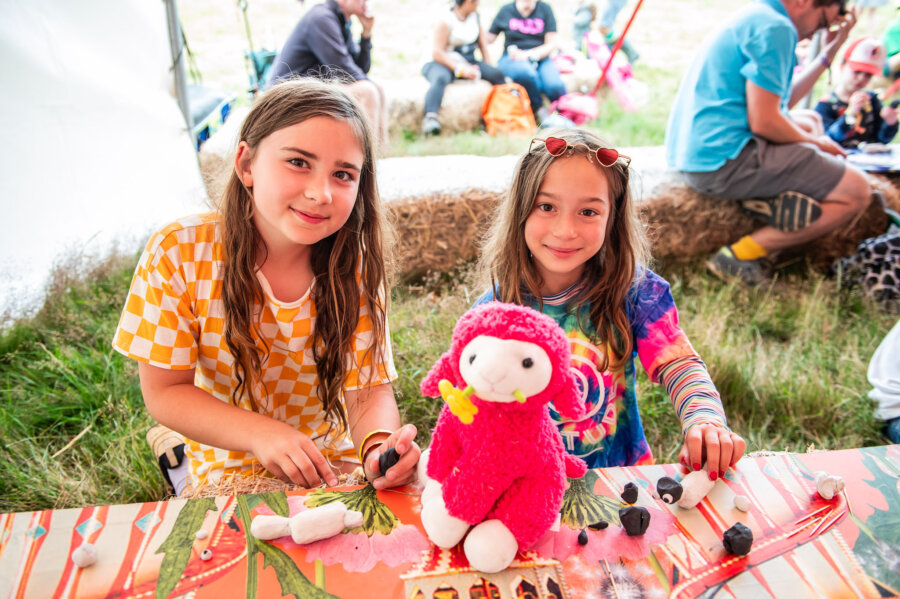
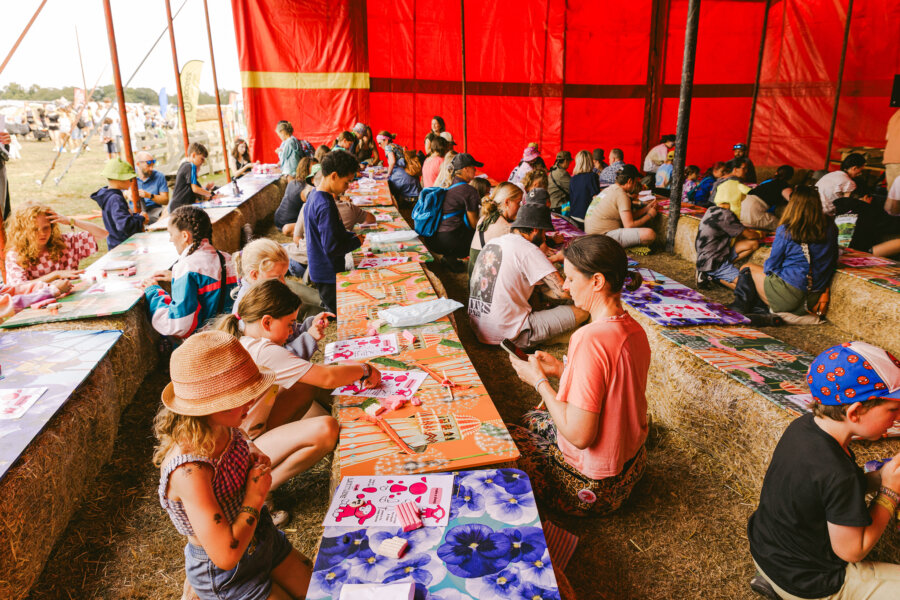
Jim has become a much-loved fixture of Latitude’s family programme, and his Henham Park tent draws crowds every summer. So what keeps him coming back? “Partly it’s the setting. What a magnificent place to get to hang out. But what I really love is the team, and in particular the team who run the Kids Zone. They’ve created this kind of magical wonderland that you don’t really need to leave for a lot of the day. You can have a really magical day and fill your time, and then in the evening you can explore even more.”
“I love my little venue on the top of the hill,” he says. “And I love seeing the returning people. People are keen to collect all the characters and models we make throughout the weekend, and come back next year to make new and exciting things. They often tell me whether the head’s fallen off their donkey, or their Gromit. There’s something really nice about the pride people have in their creations after a weekend at Latitude, and it keeps them coming back.”
In a world of tablets and touchscreens, you might think hands-on making would have lost some of its pull on younger generations. Jim doesn’t see it that way. “Actually, that touchscreen and tablet enables children and adults to make their own content rather than passively watch it. We have a fun-packed hour of model making and creating, but they often take the next step and start to bring those characters to life themselves.” Many families come back to show him the films they’ve made at home. “I always encourage people to take a photo of their amazing creation before they leave the tent, just in case anything terrible happens, or they destroy them through animation.”
If anyone can coax a nervous grown-up into picking up a lump of clay, it’s Jim. His secret? “Clay doesn’t really have consequence. Unlike pottery, we’re not firing it, so there’s no danger of it blowing up or falling apart. If it does, you can push it back together with some cocktail sticks or a good squidge of the thumb and finger. If you don’t like what you’ve created, you can simply squash it and start again.”
“If I asked you to draw a cartoon character, there’s quite an inhibition, that childhood fear of art, that lack of confidence. Modelling clay doesn’t have that stigma.” It’s also wonderfully democratic. “Plasticine and modelling clay have been around since 1897. Grandparents, great-grandparents, parents and children all have that commonality. A six-year-old can do every bit as good as a thirty-six-year-old, if not better.” His advice to grown-ups whose creations don’t quite come out right? “Just write your name on it, put age six, and pretend a child made it. You can get away with that.”
There’s something quietly profound, Jim says, about the way his workshops give families permission to play together. “The chance for children and adults and parents to play together doesn’t often happen. It’s often an exclusively children’s pastime. So the excuse for adults to sit with their kids and see what they create is rather brilliant. I always encourage everybody in the family to have a go, even if they’re too young to make the thing we’re making. Just rolling clay around and creating something of their own.”
“There aren’t many opportunities for everybody to do that at the same time,” he says. “And then you’ve got a whole family of sheep, or monsters, or aliens to put on display together when you get home. That’s really lovely.”
Every workshop, Jim says, has a surprise in store. “I’m always amazed at the ingenuity and creativity of children. If we’re making dogs, someone will want to make a cat. If we’re making cats, someone will make a pig.” But for him, the real joy is in the accessories. “I love giving you the building blocks to start off with, and then encouraging you to accessorise. A beard, a monocle, a hat, a cape, wings, a laser gun, whatever you can imagine. It elevates those makes. At the end of a workshop, looking at how people have interpreted that starting point and turned it into something unique, it’s always a lovely surprise.”
Beyond the clay creature in their pocket, Jim hopes families leave Henham Park with something less tangible. “I hope people have given themselves permission to play. So many adults get that stigma of being told they’re not very good at art at school, and they’ve left it behind. I hope they go away with some kind of confidence, a willingness to make mistakes and just enjoy the process. Whether the end result is a masterpiece is neither here nor there. The fact that they’ve had a go and made something themselves is really magical.”
“And hopefully,” he adds, “they take their creations away and bring them to life through animation. They might even begin their own career working in animation one day.”
We couldn’t let him go without asking: if he could sculpt one musician from this year’s line-up in clay, who would it be? Jim, characteristically, can’t pick just one. “David Byrne immediately springs to mind. Making an amazing big suit for a tiny character would be really good fun. John Cooper Clarke is already an amazing-looking character, so the chance to make him in clay would be brilliant. Lewis Capaldi could be really good, and I think he’d particularly enjoy it. Rosie Jones, in comedy, is a great character too.”
He pauses, warming to the idea. “I’d like to make the whole Latitude line-up in modelling clay. Latitude in miniature, that would be absolutely incredible. If anybody wants to commission me to make the Latitude line-up in clay, I’d be more than happy to do that.”
LatitudeFest
LatitudeFestival
latitudefest